In September 2026, AFRIW e.V. co-organized two side events during the 63rd session of the UN Human Rights Council in Geneva, each examining — from a different angle — what it takes to make human rights a genuine accelerator for sustainable development, rather than a parallel agenda running alongside it.
25 September — Human Rights and Implementation of the Sustainable Development Goals
Accelerating Progress Through Rights-Based Approaches
Co-organized with the International Movement for Advancement of Education Culture Social and Economic Development (IMAECSED), an India-based NGO holding ECOSOC Special Consultative Status, this panel set out to challenge a structural weakness in how the multilateral system approaches the 2030 Agenda: the treatment of human rights and sustainable development as parallel tracks rather than a single, integrated obligation.
In her opening remarks, AFRIW’s Executive Director, Joanna Wojtarowicz, set out the thinking behind the panel’s design. With the 2030 deadline four years away and the world navigating a permanent state of “poly-crisis” — climate degradation, economic shocks and structural inequality compounding each other faster than institutions were built to respond — addressing poverty, health, education, gender equality and decent work in silos masks the true velocity of rights deprivation. A single climate shock, she argued, does not only destroy infrastructure: in the same moment it can trigger a poverty spike, collapse access to healthcare, push children out of school, and eliminate formal jobs — several Sustainable Development Goals failing inside one household, at once. Protecting human dignity before 2030 requires reviewing state obligations through a cross-cutting matrix rather than separate ones.
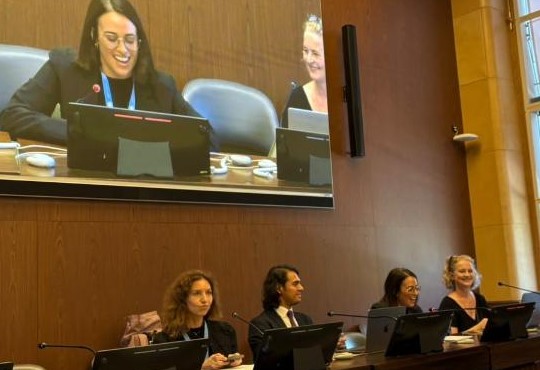
Structured as an interactive “policy sandbox” rather than a series of standalone presentations, the panel brought together five speakers, each taking one entry point into this same set of problems:
- Prof. Dr. Elena Carolina Díaz Galán, UN Special Rapporteur on Extreme Poverty and Human Rights, on poverty eradication — grounding the discussion in existing international instruments, the role of local authorities in building rights-based “Cities of Human Rights,” and the complementary roles of States, UN mechanisms and civil society
- Prof. Dr. Ivana Krstić, Vice Chair of the UN Working Group on Discrimination against Women and Girls (by video), on gender equality and intersectional justice — arguing that gender equality is a foundational condition for the entire 2030 Agenda, and that women must be recognized as agents of change, not only as those most affected by overlapping forms of inequality
- Dr. Asang Wankhede, King’s College London, on the right to quality education — examining how caste and descent-based discrimination excludes children from marginalized communities from quality education, and closing with recommendations on disaggregated data and special measures under SDG 4
- Prof. Dr. med. Christian Keßler, University of Augsburg (by video), on climate-resilient health systems — closing with the observation that sustainable development cannot occur without healthy human beings, and healthy human beings cannot exist on an unhealthy planet
- Ms. Nora Wolf, Qatar Centre for Peace and Democracy (QCPD), on decent work and migrant rights — linking sustainable development to sustainable peace through the lens of labour migration, and the need for stronger evidence and science diplomacy in SDG acceleration
The panel closed with an interactive dialogue in which live speakers named the recommendation from their own intervention they considered most urgent — inputs now feeding into the event’s outcome document.
30 September — Women on the Move: Gender Equality, Labour Migration & the Right to Development
Five days later, AFRIW co-organized a second side event with the Qatar Centre for Peace and Democracy (QCPD) and the International Society for Human Rights (ISHR), narrowing the same intersectional lens onto one group living its consequences directly: migrant women workers.
Despite growing international commitments to gender equality and inclusive development, migrant women workers continue to face disproportionate barriers to decent work, social protection and access to justice — barriers that are particularly acute in domestic and care work. Drawing on the Doha Political Declaration and CEDAW General Recommendation No. 38, and on comparative experience from Europe and the Gulf, the panel set out to identify practical recommendations for States, UN mechanisms and civil society.
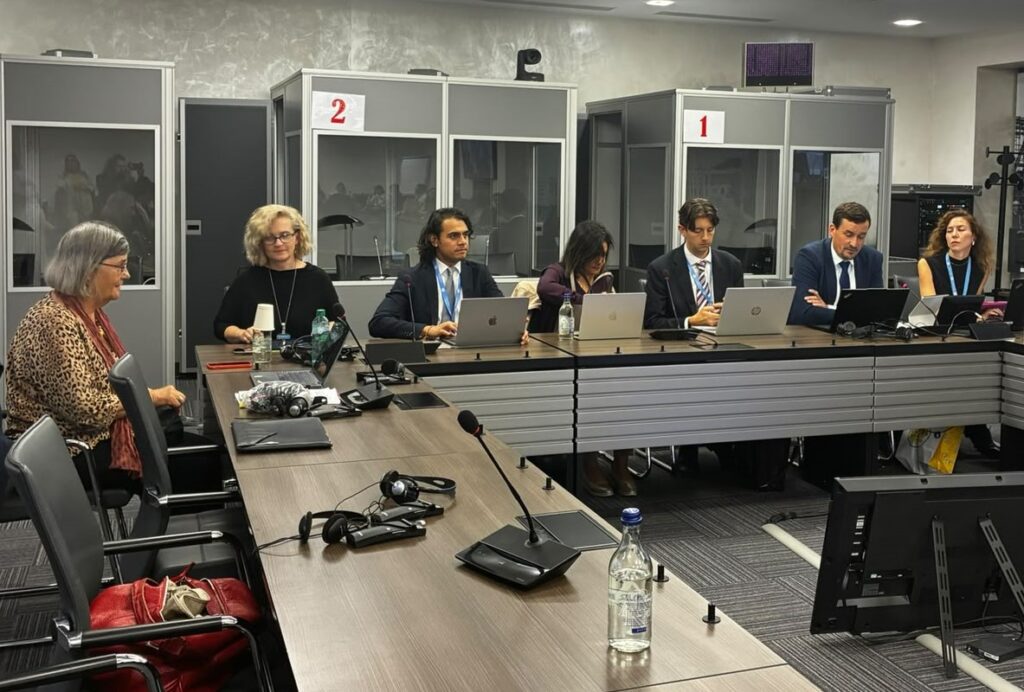
Moderated by Mr. Matthias Böhning, Secretary General of ISHR, the event opened with remarks from Prof. Ivana Krstić (by video) and continued with:
- Prof. Surya Deva, UN Special Rapporteur on the Right to Development (by video), on normative frameworks and gender equality within the right to development
- Ms. Katayoun Hosseinnejad, International Association for Human Rights Advocacy in Geneva (IAHRAG), on the different dimensions of access to justice for women migrants
- Mr. Leon Langdon, Humanists International, on the universality of rights and freedom from discrimination across regions
- Ms. Sylvia Beales, Global Call to Action Against Poverty (GCAP) and Global Coalition for Social Protection Floors, on the intersection of gender, ageing, migration and the care economy, and the case for universal social protection
- Ms. Nora Wolf, QCPD, on migrant domestic workers’ rights in the Gulf, sponsorship reforms and undocumented work
- Dr. Asang Wankhede, King’s College London, on caste, descent and work as drivers of intersectional discrimination against migrant women, in both countries of origin and diaspora contexts
AFRIW’s Chair, Joanna Wojtarowicz, spoke on the experiences of migrant women in skilled employment across the European Union, drawing on AFRIW’s own counselling and casework in Germany. She traced how inequality is produced across three stages of a woman’s migration journey — unlicensed recruitment practices that leave women indebted before arrival, employment conditions in care and domestic work that fall outside the reach of labour inspection, and barriers to justice created when a residence permit is tied to a single employer — and closed with five recommendations addressing recruitment licensing, gender-responsive safeguards in bilateral migration agreements, independent labour inspection, faster recognition of foreign qualifications, and safe, confidential reporting channels.
Comparing the Two Events
Though built around different formats and different co-organizers, the two panels advanced the same underlying argument from different vantage points.
Shared premise. Both events rejected a siloed approach to the 2030 Agenda. The 25 September panel made this explicit at the level of the SDG framework itself — arguing that poverty, health, education, gender and labour targets must be read as one interconnected obligation. The 30 September panel applied that same premise to a specific population, showing how gender, migration status, caste, age and economic precarity compound within the lived experience of migrant women, rather than acting as separate categories of disadvantage.
Shared speakers, shared throughline. Three experts appeared on both panels — Prof. Ivana Krstić, Dr. Asang Wankhede and Ms. Nora Wolf — each carrying their specialism from the general framework discussed on 25 September into its specific application to migrant women five days later: Krstić’s intersectional reading of gender equality, Wankhede’s analysis of caste and descent-based exclusion, and Wolf’s focus on labour rights and migration.
Shared conclusion. Both events converged on the same practical finding: effective policy requires rights-based, cross-sectoral approaches, grounded in existing international instruments (from the SDGs and CEDAW to ILO conventions), and built with input from those most affected — whether communities furthest behind on poverty and education, or migrant women navigating recruitment, employment and justice systems not designed with them in mind. In both cases, the panels argued, data disaggregation, stronger accountability mechanisms, and the direct participation of affected groups emerged as the common tools needed to close these gaps.
Next Steps
AFRIW, together with its co-organizers, is now compiling the key messages, recommendations and proposed follow-up actions from both events into a concise outcome document, for circulation to UN mechanisms, Member States and ECOSOC-accredited NGOs. The document will form part of AFRIW’s ongoing advocacy on the intersection of human rights, sustainable development, labour migration and gender equality.
We are grateful to IMAECSED, QCPD and ISHR for their partnership, and to every speaker who gave their time and expertise to these conversations.